Astolfo Roleplay: Scene Prompts and Steering for CAICHAT
You open a chat with an Astolfo-style character, type a friendly hello, and get back something bright, warm and completely weightless. There is nothing in it to answer. The greeting usually isn’t the problem. The scene has no decision in it, and nobody has given Astolfo anything to push against.
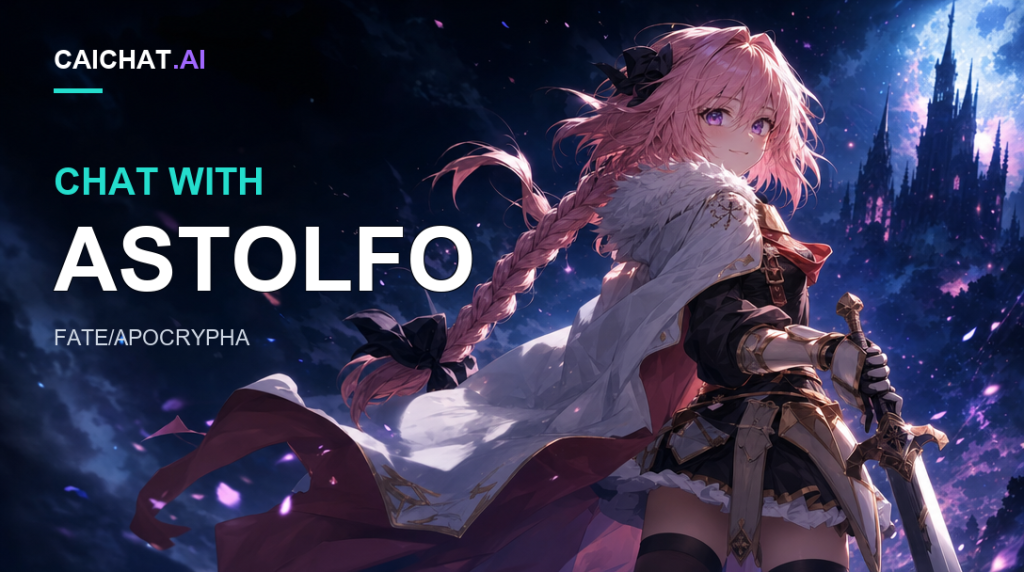
Astolfo is Rider of Black in Fate/Apocrypha and one of Charlemagne’s paladins: cheerful and impulsive, and brave when a situation turns genuinely difficult. That short description follows the official Japanese character profile, and the official English character list confirms the name and the series context. Everything else here is invented: adult alternate-universe scenes with an adult original travelling companion. None of it is canon, and it isn’t presented as canon. Stick with the Fate/Apocrypha Rider rather than blending in every other version of the character.
Practical bits first, all from the official first-steps documentation: CAICHAT is for adults 18+. Browsing and search work without an account; chatting needs sign-in and a verified email, which a Magic Link or Google sign-in may already handle. Persona, model and behaviour are yours to choose, some access and features cost tokens, stage directions can go inside asterisks, replies can be regenerated, and a line starting with /cmd steers the AI.
The fastest way in is to search the catalog for Astolfo. If nothing comes back, the card may not be there at all; read the description and greeting on whatever does appear, or try a related term before giving up.
Scene one: the door is already open
Two adults on the road, a shortcut that looks too easy, and a companion who wants to take it. The momentum is his. The decision is yours.
Adult AU, Astolfo from Fate/Apocrypha, and we are both adults travelling together. We reach a decommissioned watchtower at dusk. The door is ajar, and fresh boot prints stop dead at the threshold. Play Astolfo as quick, a little reckless, and worried underneath it. I play my own character and I decide what we do. Open with him spotting the prints and turning to ask me which way we go. Don’t have him step inside on his own.
If he resolves the choice for you, correct the turn before the story runs on. Say it plainly in your next message, or hand the steering to the command line:
/cmd keep his impulse intact, but let my answer decide what happens next
Regenerating the reply is fair game too, especially when a tense scene collapses into “he goes in and it’s fine.”
Scene two: the stranger and the promise
This one asks something different of you. Helping is the easy part for him; the cost is the interesting part.
Same adult AU and the same travelling pair. We are two hours from a village festival I promised to reach before nightfall. A stranger on the road has a shattered cart wheel and a story that doesn’t quite hold together. Astolfo wants to stop and help, and that part isn’t in question. What I decide is how much of my promise I am willing to spend. Play the pull between his cheerful willingness and the clock. Don’t settle the trade-off for me, and don’t make the stranger harmless just because Astolfo was kind.
One scene is about trusting an easy path; the other is about what kindness costs. Running the same rescue three times in a row flattens him. A scene where he is brave, followed by a scene where he is wrong, stays interesting.
Keeping cheerful from turning weightless
A fast, bright reaction to whatever is in front of him is the trait worth building on. It stops being useful when every reply lands as a joke. A few habits help:
- Ask about the feeling under the grin: “You’re smiling. What part of this actually worries you?”
- Add a deadline. Pressure is what makes an impulsive character’s choices visible.
- Answer in character instead of asking another question; the tone you set is the tone you get back.
- Restate the two facts that matter when a long session drifts, such as who is waiting and how much time is left. Details from forty messages ago tend to fall out.
What not to test it on
Don’t use the chat as a lore exam. Ask him what he thinks about the choice in front of him, how he feels about the person he is trying to help, or what he would do differently, and you get something usable. Ask for a precise ability, a timeline or a line of dialogue from the source and you are testing recall rather than character, and the answer is more likely to be invented than accurate. For the real profile, the official pages above are where to look.
If you want a scene that keeps moving, put one decision in front of him, let him push hard toward the wrong answer sometimes, and reply as your own character rather than as a narrator. That is usually enough to turn a pleasant nothing of a chat into a scene with stakes.

Jane Cai
Writer and content creator at caichat.ai. Covering AI character interactions, anime, gaming, and pop culture. Passionate about the intersection of artificial intelligence and storytelling.