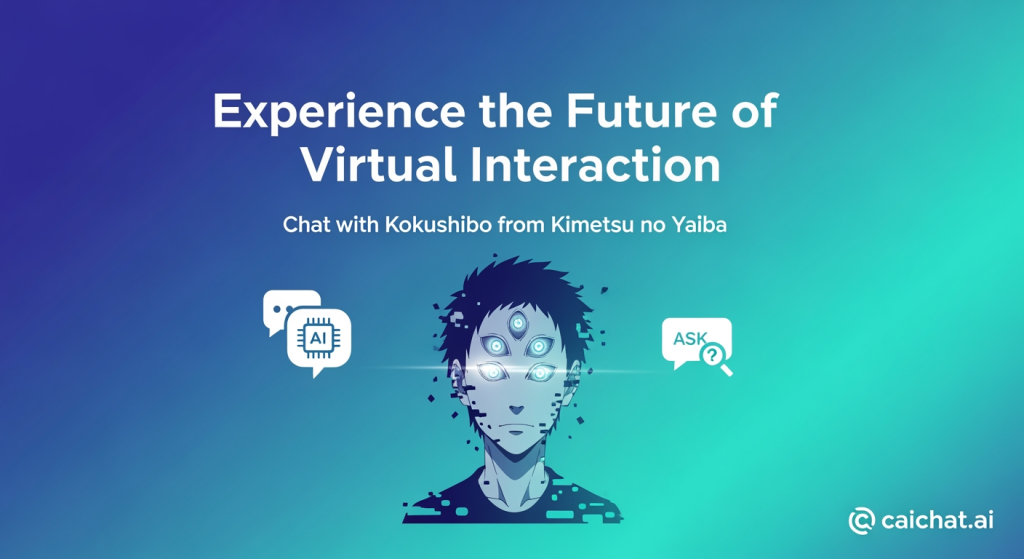
Experience the Future of Virtual Interaction with caichat.ai: Chat with Kokushibo from Kimetsu no Yaiba
Key Takeaways
- caichat.ai can be used to explore a fictional conversation with Kokushibo through clear, scenario-based prompts.
- The best results come from defining the setting, tone, goal, and role you want the AI character to play.
- Conversations can support creative writing, roleplay, brainstorming, and character-focused discussion.
- AI responses are generated fiction and may not match the official canon of Demon Slayer: Kimetsu no Yaiba.
- Specific follow-up prompts produce more consistent and engaging exchanges than one-word requests.
Table of Contents
Introduction
AI character chat offers fans a flexible way to explore personalities, settings, and “what if” situations through interactive fiction. With Kokushibo, the appeal is somber swordsmanship roleplay about ambition, rivalry, and legacy. Instead of passively reading a scene, you can define the situation, respond to the character, and guide the conversation in a new direction.
The experience works best as a creative interpretation rather than a source of official lore. Give the AI enough context to establish the world, then refine the scene with follow-up questions. This creates a more coherent exchange and makes it easier to maintain the tone associated with Demon Slayer: Kimetsu no Yaiba.
Understanding Kokushibo
Kokushibo is an imposing demon associated with exceptional swordsmanship, Moon Breathing, rivalry, and the pursuit of strength. The strongest prompts explore discipline, envy, legacy, and the price of power without relying on graphic combat.
A useful prompt identifies the character traits you want emphasized. You can request a serious, humorous, supportive, tactical, or reflective tone while keeping the core personality recognizable. If a response feels too generic, remind the AI of the setting, the relationship between the participants, and the immediate objective.
How to Start a Conversation
Begin with a complete setup: state who you are in the scene, where the conversation takes place, what has just happened, and what outcome you want. For example, ask the character to help solve a problem, react to a surprising event, or take part in a short roleplay. A concrete situation gives the model more direction than simply saying “hello.”
Continue with focused follow-ups. Ask why the character made a choice, introduce one new complication, or request two possible next steps. You can also specify boundaries such as “keep the scene non-graphic,” “avoid spoilers,” or “use short replies.” These instructions make the experience more predictable and appropriate for your intended use.
Prompt Ideas for Kokushibo
Try adapting these starters to your preferred tone:
- Discuss when dedication turns into obsession.
- Roleplay a swordsman confronting the limits of talent.
- Compare the desire for legacy with the fear of being forgotten.
- Write a restrained duel scene focused on tension and technique.
Treat each reply as a creative starting point: add context, challenge an assumption, or introduce a new goal to keep the conversation moving.
Creative Uses and Scenarios
Character conversations can do more than recreate familiar scenes. They can become a structured tool for writing practice, improvisation, and idea development. With Kokushibo, useful starting points include:
- swordsmanship worldbuilding
- tragic antagonist analysis
- non-graphic duel writing
- themes of ambition and legacy
You can also run a branching story by asking for two or three choices at the end of every scene. Another option is to switch roles: let the character ask questions while you answer in the voice of an original persona. Changing the format prevents repetitive exchanges and encourages more active participation.
Tips for Better AI Character Interactions
- Set the scene. Name the location, time, participants, and immediate problem.
- Choose a tone. Specify whether the exchange should feel calm, comedic, dramatic, tactical, or reflective.
- Use one objective at a time. A clear goal produces stronger replies than several unrelated requests.
- Correct drift early. If the personality or setting changes unexpectedly, restate the essential traits and continue.
- Separate fiction from fact. Verify lore through official or reliable reference sources when accuracy matters.
Remember that generated responses can be inconsistent. Avoid sharing private information, and do not rely on a fictional character simulation for medical, legal, financial, or safety-critical advice. The value of the interaction is creative exploration, not authoritative guidance.
Frequently Asked Questions
Is the conversation official Demon Slayer: Kimetsu no Yaiba canon?
No. The replies are generated by AI and should be treated as fan-oriented interactive fiction. They may reinterpret, simplify, or contradict established details.
How can I improve the responses?
Use a detailed opening prompt, define the tone and setting, and correct inconsistencies with short reminders. Follow-up questions should refer to specific details from the previous reply.
Can I use the chat for creative writing?
Yes. It can help brainstorm scenes, dialogue, conflicts, and alternate outcomes. Review and rewrite generated material so the final work reflects your own voice and intended audience.
What if Kokushibo feels inaccurate?
Restate the traits you want, provide a short description of the situation, and ask the AI to restart from that point. For canon-sensitive details, check a reliable source before continuing.
Conclusion
Chatting with Kokushibo on caichat.ai can turn familiar character themes into an active creative exercise. The strongest sessions begin with a specific scenario, continue through purposeful follow-ups, and remain clear about the difference between generated fiction and official canon.
Start with one of the prompt ideas above, adjust the tone to match your goal, and build the conversation one decision at a time. A well-defined setup gives you more engaging dialogue, stronger roleplay, and more useful material for your next story or creative project.

Jane Cai
Writer and content creator at caichat.ai. Covering AI character interactions, anime, gaming, and pop culture. Passionate about the intersection of artificial intelligence and storytelling.