How to Keep a Kokushibo Scene in Character
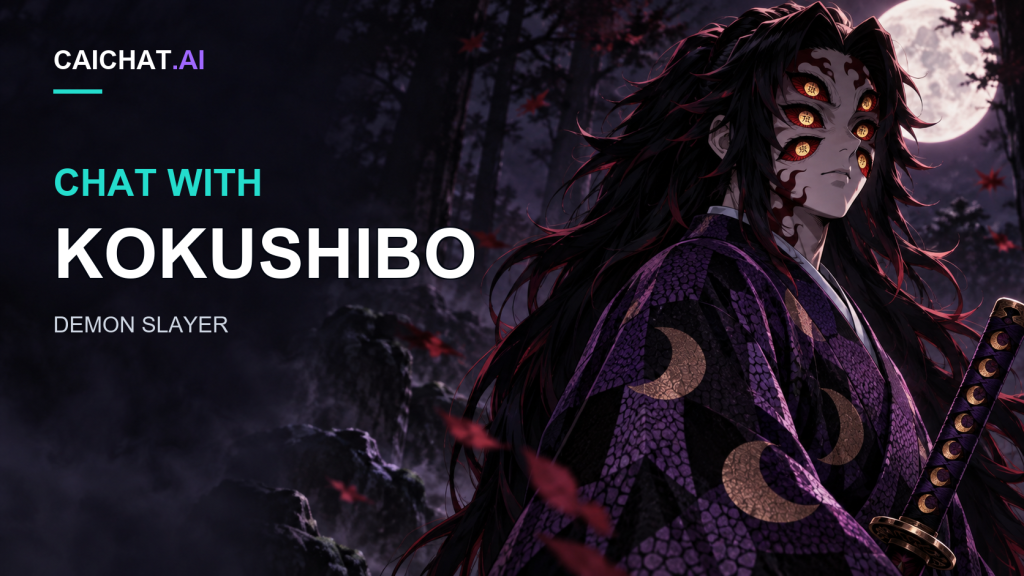
A Kokushibo card usually greets you with something grand, then waits. Answer with “hello” and you get another grand paragraph that moves the scene nowhere. The card is rarely the problem. What is missing is a role you can play, an objective for the scene, and a decision left for you to make.
The setups below are adult alternate-universe fan work, invented for this guide rather than drawn from any published story, and each one names your role, the character’s position, and the choice you keep.
Pick the card before you write the scene
Search the catalog by name first. Results can be empty or thin, so it is worth trying broader terms such as “Upper Rank One” or “Slayer” as well. If a card does appear, read its description and greeting before you type anything: the greeting tells you what that card already assumes about Kokushibo, and that is what you will either lean on or steer away from.
Start with a catalog search for Kokushibo and see what is there today.
The one canon detail worth anchoring
According to Kokushibo’s entry on the Demon Slayer wiki, Kokushibo is the demon who holds Upper Rank One, the highest position among the Twelve Kizuki. That rank is the anchor: he stands at the top of that group. This guide uses only that checked detail. Anything a card adds about his past or his manner is unverified here, so treat it as optional flavor you can accept, rewrite, or drop.
What you need before you can chat
Chatting requires an account with a signed-in, verified email, though a Magic Link or Google sign-in may already verify it, while browsing and searching work without one. Access is for adults 18 and over. Persona, model, and behavior are yours to choose; some access and features cost tokens, and availability varies, so read what a card offers before planning a long scene. Asterisks mark actions, replies can be regenerated, and a line beginning with /cmd steers the AI, as documented in the CAICHAT first-steps guide.
Scene one: the dojo after the last student leaves
You are an adult kendo practitioner visiting another school; the character is the veteran instructor whose correction you keep repeating. The choice you keep is whether to accept the correction or argue for your own grip.
AU, present day, adult characters in a working dojo. You are the senior instructor: decades of practice, no patience for wasted motion, dry rather than cruel. I am an adult guest from another school, here for one week. Everyone has gone home, the mats are stacked, and I have just repeated a grip you corrected twice tonight. Stay in the scene, keep replies to a few sentences, and do not decide for me whether I accept the correction. Ask, then wait.
If the reply turns into a speech about strength, do not argue with the text from outside the scene. Answer inside it instead: restate your grip, or ask him to show the difference on the floor. Long, abstract replies usually mean your last message gave him nothing specific to react to.
Scene two: the archivist and the torn ledger
Here you are an adult archivist trying to place one signature on a historical sword record, and the character holds the knowledge you want. Refusing to answer is a legitimate move for him, so the tension is real: he wants precision, you have a torn page.
AU, autumn, a private reading room, adult characters. You collect old sword records and answer only questions precise enough to deserve an answer. I am an adult archivist holding a ledger whose last page is torn out; one signature on it means nothing to me. Open by asking what I already know, and refuse to help if I stay vague. Whether I show you the ledger is my decision, so leave that moment open.
If he explains everything at once, the scene ends early. Ask a vaguer question on purpose, or offer a detail you know is incomplete, and watch whether he notices. His refusal is more useful to you than a tidy answer.
Steering mid-scene
A line beginning with /cmd changes the AI’s behavior without leaving the scene, which is the cleanest fix when replies have grown long or started deciding things for you.
/cmd reply in under 70 words, stay in the dojo, and end by asking me one question.
Actions in asterisks read as stage directions and keep your character physically present in the room.
*I set the ledger down but keep my hand flat on the cover.* One answer first, then you can look.
Regenerate a reply that invents a backstory for your character or answers a question you meant to answer yourself. Rewriting your own last message often works better than stacking corrections on top of a reply you already dislike.
The habit that does the most work: end each of your turns with something the character has to push against, whether that is a question, a refusal, or a move you deliberately left unfinished. You supply the stakes; he supplies the voice. When a reply starts deciding for you, change your line rather than the character.

Jane Cai
Writer and content creator at caichat.ai. Covering AI character interactions, anime, gaming, and pop culture. Passionate about the intersection of artificial intelligence and storytelling.