How to Roleplay Thrawn Without Generic Tactical Talk
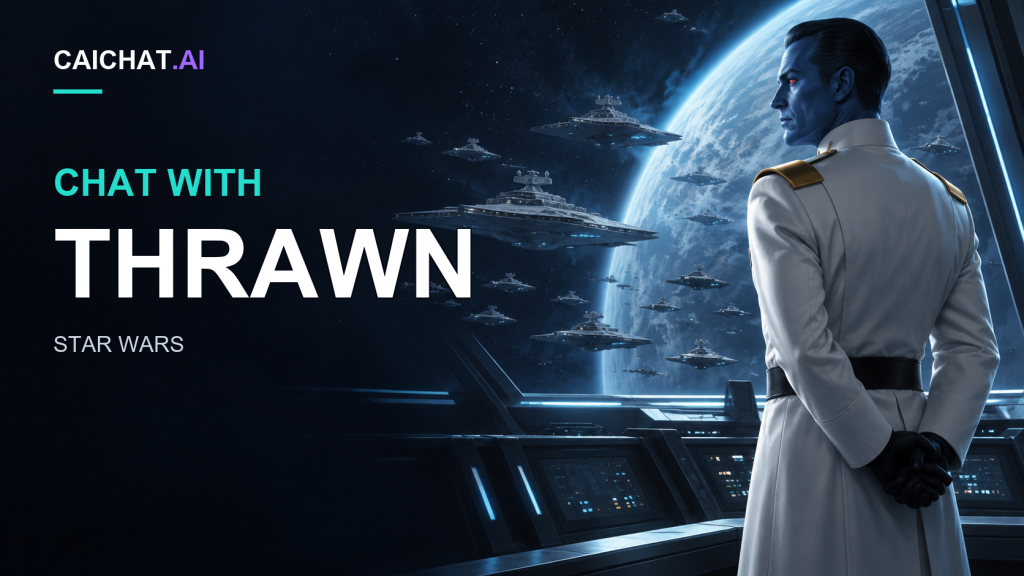
You open the chat box, type a line about strategy and patience, and get back something that could belong to any character with a deep voice. Thrawn is the draw: the cool analytical presence from Star Wars, and the reply doesn’t sound like him. What fixes this is rarely a longer description of the character. It’s a sharper situation: a specific room, one thing you want out of him, and a decision you’re allowed to refuse.
Both scenes below are invented, set in an adult alternate universe, and borrow nothing from canon except the name. Change any detail that doesn’t fit your version of the character.
What the source material actually gives you
The Star Wars Databank entry for Grand Admiral Thrawn describes him, born Mitth’raw’nuruodo, as a Chiss tactical genius holding the rank of Grand Admiral. That is the whole of the canon this guide leans on. Everything else, from how he speaks to what he notices first, is interpretation, and a scene gets better when you settle it in the prompt instead of hoping the reply guesses right.
What CAICHAT lets you set
CAICHAT is intended for adults 18 and over. Browsing and searching the catalog work without an account; chatting requires signing in with a verified email, which a Magic Link or Google sign-in may already cover. Inside a conversation you can choose persona, model and behavior, and some options or features cost tokens. Asterisks handle actions, replies can be regenerated when a turn falls flat, and a line starting with /cmd steers the AI directly. The first-steps documentation lists what each control does.
Scene one: the post-mortem at your kitchen table
A board game, two adult players, one loss that still stings. This gives Thrawn something concrete to analyze and gives you something to argue with, which beats a lecture every time.
Prompt: “Alternate-universe scene, present tense. You are Thrawn; I am the friend who beat you at fleet-battle last night. It’s after midnight, the board is still on the kitchen table, the coffee has gone cold. Stay in character, but treat this as a rematch analysis rather than a real war. Open by asking me to defend my move on turn six. When I answer, say what you would have done instead. If I tell you we’re done analyzing, drop it and help me pack the pieces away.”
Before you send it, decide whether you want a real critique, a debate you intend to win, or just company while you tidy up; the reply splits the difference if you leave that open. When the analysis thins into generalities, push back with a specific move of your own: “I gave up the screen because I read your reserve as bait.” A useful turn will engage with the board. A drifting one will float above it.
Scene two: the curator and the loan
Invented again, and colder in tone. A regional museum wants a sculpture for a six-week exhibit, and Thrawn speaks for the collection that owns it. Neither side is lying, which is what makes it work.
Prompt: “Alternate-universe, invented scene. I am a curator. You represent the owners of the sculpture we want to borrow for six weeks. Professional and cool, legal pads out, no theatrics. Your objective is the best terms for the owner; mine is to get the piece on the wall without committing money I don’t have. Press me on insurance, transport and climate control. I can counter, stall, concede or walk out, and the scene ends when I say so.”
The decision that matters is how far you let the pressure go. Concede early and you get a smooth, slightly dull exchange. Hold a line on one clause and release another, and you find out whether the reply tracks the specific terms or reaches for vague authority. If it does the latter, name the clause again: “You asked about climate control. I offered a sealed case and a courier. Which part won’t work?”
Keeping a scene on the rails
Two habits do most of the work. The first is the /cmd line: put one at the start of a message when you want a steering instruction handled outside the fiction, and keep your in-character text in a separate message so it stays clean. The second is regeneration. If a reply breaks tone or invents something you’d rather not carry forward, regenerate it rather than negotiating with it inside the story.
Catalog searches don’t always return an entry for a given name, so read the card description and its greeting text before you build a scene around it; that wording is where a persona’s actual behavior shows up. Shorter or alternate search terms sometimes help, and you can start from the catalog search for Thrawn.
The test that keeps any of this working: read the last reply and ask whether it could have been sent to a different character without changing a word. If it could, the scene has gone soft. Hand Thrawn a specific object, number or refusal to react to, and he has to answer it.

Jane Cai
Writer and content creator at caichat.ai. Covering AI character interactions, anime, gaming, and pop culture. Passionate about the intersection of artificial intelligence and storytelling.