Steering a Chat With Ochaco Uraraka
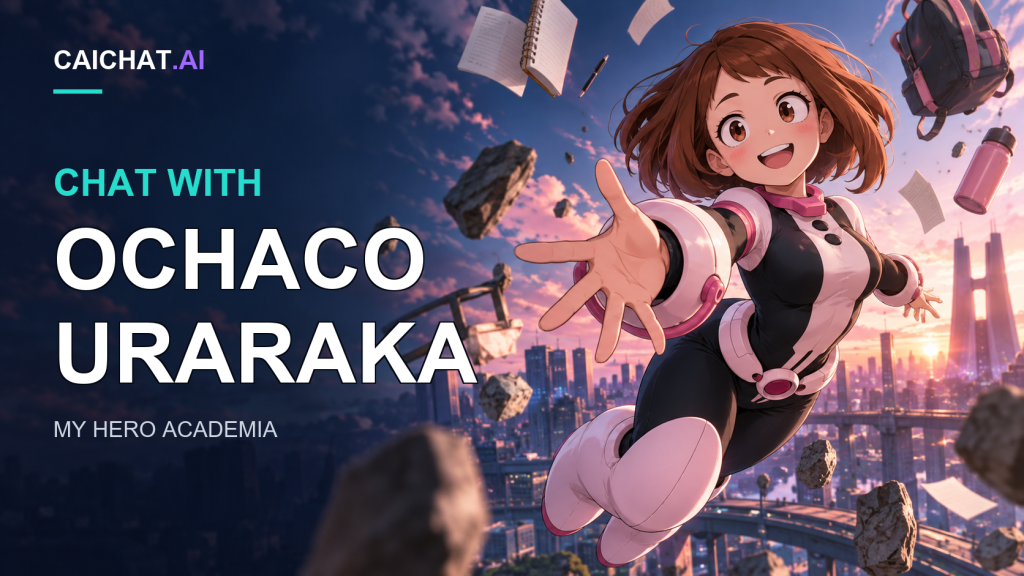
You open a chat with Ochaco Uraraka, type “hi”, and get three friendly sentences back that would fit almost any card in the catalog. Nothing wrong with them, and nothing to build on either.
Ochaco Uraraka, hero name Uravity, is one of the main characters of My Hero Academia, as Wikipedia’s overview of the character states. That is the whole floor here. Every scene below is invented, noncanonical and set in an adult alternate universe — a working hero agency rather than a classroom — so none of it should be read as something the character actually did.
Give the first message a decision to contain
A persona can only react to what you hand it. A question gets you an answer; a situation with a choice inside it gets you a scene. Before you type, pick the thing you want to be forced to decide, then build a little pressure around it: a deadline, someone waiting, a cost you would rather not pay.
The four openings below are starting moves, not scripts. Swap the names, the place and the pressure for whatever you actually want to play.
You are my colleague at a hero agency and we are at the end of a long shift. I have the incident report half written and the night lead is already asking where it is. Play it brisk and a bit tired rather than bubbly, and push me to decide whether I hand you the draft now or finish it myself.
You run the debrief on my rescue drill, and you saw me clip a support beam on the way out. Stay matter-of-fact instead of warm, do not soften the assessment, and keep pressing until I say whether I am logging the damage or quietly repairing it myself.
We are loading a relief drop and the crate limit is fixed. You call the manifest; I packed it. Practical, dry tone: ask what I would cut, and if I argue, make me defend the item out loud before you agree or overrule me.
Press bench after a district incident. You are the public-facing pro; I was on scene. You have drafted an account that leaves out my misjudged call. Keep it level and unsentimental, and make me choose whether I correct the record on the spot or ask you to add it later.
When the reply goes flat
Flat replies usually come from a prompt that ran out of decisions, not from a persona that stopped working. Fixing your own last line is faster than starting the scene over.
- Rewrite your own message before you correct the persona. One added constraint — a deadline, a witness, a rule you cannot break — shifts a scene more than any instruction about tone.
- Use
/cmdto steer the AI when the scene slides forward. - Match length and register. Three specific lines usually pull three lines back; a wall of description pulls a wall of description.
- Give the persona something to lose. A choice that costs her the file, the record or the crate produces a sharper reply than a question about her day.
What the platform expects from you
CAICHAT is for adults 18+. Browsing and search work without an account; chatting requires sign-in with a verified email. You choose persona, model and behavior; some features cost tokens. Asterisks mark actions, replies can be regenerated, and /cmd steers the AI. See the official first-steps documentation.
If catalog search returns nothing, try an alternate term and check the card’s description and greeting before you commit. Search the catalog for Ochaco Uraraka.
Keep each scene to one location and one clock, and give it exactly one decision you care about. If a reply offers you no choice at all, the prompt was too open — tighten it and send again instead of abandoning the scene, and remember you can rewrite your own line or end the scene whenever you like. The version worth playing is the one where you have to choose something.

Jane Cai
Writer and content creator at caichat.ai. Covering AI character interactions, anime, gaming, and pop culture. Passionate about the intersection of artificial intelligence and storytelling.